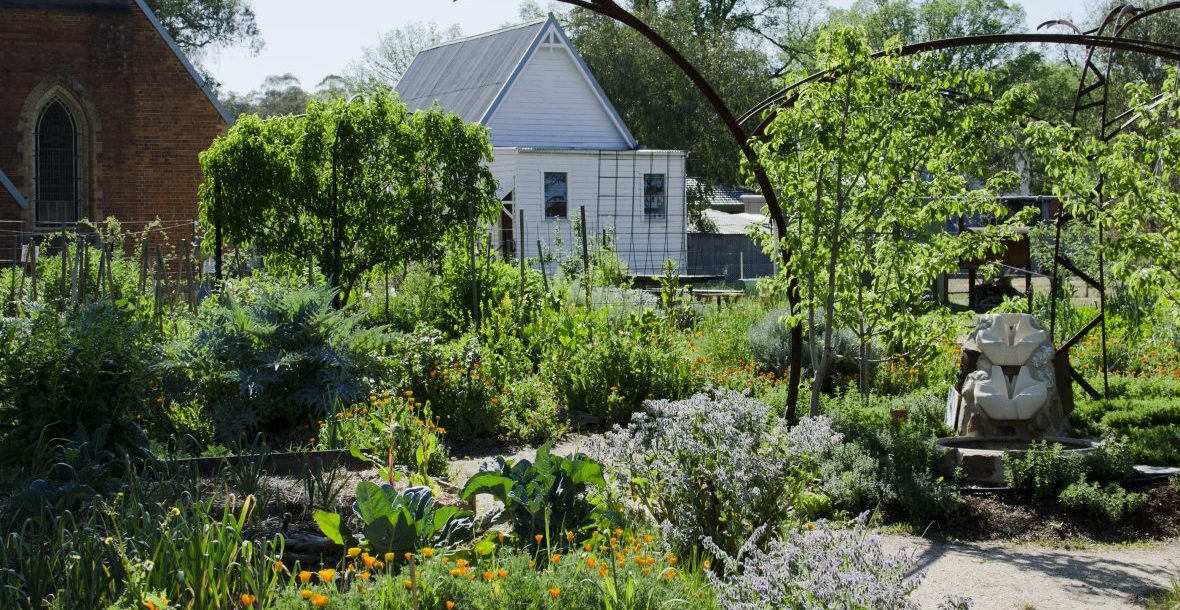
The Uninvited Guest

The other morning we were happily scratching in the garden when plotholder Anthony reminded us about the importance of weeding. He said “you ought to write a post about that for the blog”. I said, “good idea, why don’t you write something…!”

So here’s Anthony’s missive:

Imagine if you had to compete against an uninvited guest at dinner time. Imagine if your uninvited guest had no boundaries and encroached upon your personal space. What would you do?

Plants are no different to human beings in having their needs met so that they thrive.

Moreover, WEEDS can be like that uninvited guest at meal time, robbing other plants of nutrients, stressing them out, and stifling their full potential There are also plants that find companionship with others but there are sometimes those uninvited guests that leave others bereft and wanting.

So …. what’s happening in your garden?

After this beautiful rain, the weeds will thrive, so unless you are cultivating them for a reason, do the compost a favor… Thanks Anthony.

Newstead garden raised beds installed august 2012, garden in winterPS. Notes from the berry pruning workshop at Diggers Club St Erth are now available:

Download -Blue berries

Download - Growing and pruning berries

Download - Growing cane berries

Download - Growing your own strawberries organically

Link to - Strawberries

Prune in June

diggers pruning wkshp022

goldmine nectarine – quite vigorously pruned

I went along to the Diggers Club berry pruning workshop at the Garden of St Erth last weekend hoping to find out how to tackle our loganberry, boysenberry and raspberry canes.

It’s worth visiting the garden (our garden is a member so entry is free for members) to see the mature fruit trees which have been (very!) strongly trained and pruned, as well as some magnificent specimen trees – and the even more magnificent bush behind the garden (tracks link with the Great Dividing Trail and Lerdederg State Forest)

loganberry - primocanes removed

loganberry – primocanes removed

Unfortunately much of the berry pruning had already been carried out, but I was able to see what we need to do – it’s all about primocanes and floricanes and the particular variety of raspberry (sounds easy (!?)…. stay tuned, apparently the day’s pruning notes will be emailed). Having enough height and space on your frame for maximum fruiting growth is also crucial.

In the meantime I’m wondering about trying some other types of raspberries (after first working out which ones we actually have!) and planting a couple of tay berries and perhaps trying some blueberries in pots….

So, to June in the garden – yes, pruning the berries, finishing planting strawberries, pruning the apples and pears for structure, especially the espaliers, planting our bay and lemons …. watching the compost steam, and more, according to the June notes. Enjoy the breath of winter in the garden.

Don’t forget: Memberships are due – see Liz at The Red Store; Produce Exchange on this Saturday 10.30 – 12noon.

thornless blackberry - primocanes removed, floricanes which will bear this season's fruit tied up and tips trimmed to head height or to suit frame

thornless blackberry – primocanes removed, floricanes which will bear this season’s fruit tied up and tips trimmed to head height or to suit frame

summer fruiting raspebrries - floricanes will bear next year's fruit

summer fruiting raspebrries – floricanes will bear next year’s fruit

summer fruiting raspberry  primocanes

summer fruiting raspberry floricanes

A heating heap …. and rain!

Last Sunday the Newstead Community Garden turned three and we celebrated with compost making, and rain. By Thursday the heap was at 58.5 degrees C (at 14cm depth and probably hotter at its core) and we had over 12mm in the gauge.

Building a large compost heap is not only critical for soil building but it is also a great community activity and we couldn’t do it without extra hands. Jay Smith from Mount Alexander Shire and Rosie and Ernst Gegenhuber from BD Victoria supported us and gardeners came from Newstead, Castlemaine, Taradale and other areas to learn about the basics and help build our heap. Our peppercorn tree makes a great ‘classroom’, even in rain.

learning the art of composting at Newstead Community GardenCompost is the most important tool in organic and biodynamic gardening, where the focus is on feeding the soil. It’s the bacteria, fungi and other microbes that do the work for us, turning ‘waste’ into a rich resource, improving the soil and providing plant nutrients. We built our heap with successive layers of carbon (brown) and nitrogen (green) and included the biodynamic herb-based preparations of valerian, chamomile, nettle, yarrow, oak bark and dandelion. Other materials like eggshells, lime, dolomite and rockdust added minerals. Aeration, heaps of water and then a covering ‘blanket’ of thick straw set up the ideal conditions for composting.

learning how to make biodynamic compost - lessons under the pepper treeBiodynamics also works with the wider cosmos – the rhythms and cycles of the moon, stars and planets: ‘as above, so below’. We made the most of a waning (synodal rhythm) and descending moon (tropical rhythm) and a “root” day when the moon was passing through the earth constellation or sign of Taurus (sidereal rhythm). All perfect for compost making. Now we watch and wait.

We also stirred a batch of Horn Manure (BD500) through our flowforms and sprayed the garden and compost heap at the end of the day. We always have enough left for members to take some for their home gardens, so the preps are being spread well beyond the community garden.

Thanks to local biodynamic sheep and grain growers and other local farmers, gardeners and businesses who contributed with gifts of green material, lawn clippings, leaves and manure. Garden members catered with food and helped collect shearing shed manure and cart spelt hulls. We have so much material we are thinking about building another heap, once there’s a bit more green about, perhaps in six weeks or so. You can never have too much compost!

NB. more photos from the day to come…..

Compost Sunday….

The certified organic oaten straw is here, so is the manure….Don’t forget our compost creating day on this Sunday. It’s also our birthday – there will be Community Garden Cake, with three candles, along with plenty of food to fortify us.

The workshop is free for those who wish to bring their own morning and afternoon tea and lunches, but we’re offering all that plus tea, coffee and water on tap all day for $15. We still need chemical free green waste (who doesn’t) for the heap – fallen leaves, kitchen scraps, grass clippings, etc. Usually the amount of green material will determine the size of the heap but this year we’ll just have to improvise and see what happens….

Not too late to register – email  ecologica@bigpond.com or contact Mary 5476 2593 or Janet 0439 003 469. Wear gardening gear and bring a shovel or fork if you can; it’ll be hands on. But this isn’t just for those wielding a spade. Even If you aren’t able to lift or do physical garden stuff, you’ll still learn and meet fellow gardeners and be welcome and well fed!

inserting-preps -http://seresinestate.blogspot.com.au/2008_06_01_archive.html

How’s this for composting – found this fantastic image at a BD vineyard in NZ who take communal composting to a new level! Check out the website which also has some good info – they actually make site/purpose specific compost heaps. (Thanks to Seresin Estate for the image, which I have taken the liberty of……)

May it Pour

DSC00006Eyes on the skies – we’ve had barely 9mm  in April and 47mm for the year. Not great for autumn, an important season for ripening and new growth. Luckily we have good quality water on tap so the garden is faring well. Not so well in generating green weeds and materials for composting, but we will do our best to gather what we can.

Fallen autumn leaves make the most beautiful seed raising mix and compost, and can even be composted with few other additions, if turned, aerated and lime added. Even better in a ‘proper’ compost.

It’s also confusing to know what to plant, without the usual signs and portents. However the May Planting Notes are now posted – good luck! And good rainfall, we hope.

new strawberry beds....

new strawberry beds….

...old strawberry beds

…old strawberry beds

See you at the Compost Day on Sunday 12th, if not our Produce Exchange this Saturday at 10.30 outside the Red Store. What will be up for exchange this month?Probably sauces and preserves, perhaps apples. No doubt jerusalem artichokes if we get them lifted – the leaves are yellowing off and it’s time to dig a few and see what’s underneath. We’ll also be planting strawberry runners this month and trying out our new weed gunnel to see if it helps with weed control and pests and protect soil.

DSC00037Also a couple of Newstead Tomatoes have finally ripened and we wait for more, thanks to poly covering at night, the plants just might hang on…..

Gathering the Good Stuff

We have been collecting and hoarding materials ahead of our compost building day on Sunday May 12. To composters who use biodynamic methods, cow manure is sacred stuff and we’ve sourced some from a certified organic dairy shorthorn herd near Bendigo. We’ve also just cleared out biodynamic sheep manure from under a local shearing shed. Then there’s the certified organic straw from organic graingrowers north of here.

materials for making compostThe key to our heap this year though will be finding enough chemical-free green materials,  like fresh grass clippings, food waste, fallen leaves, weeds, etc – the amount we can accrue of these will determine the size of our heap. I reckon we need at least three cubic meters if we can. That’s a lot of green waste in a dry autumn. But if you also think that in Australia each year we throw out 4 million tonnes of food, a third of this fresh, worth $8 billion, it shouldn’t be too difficult to find some for composting! The stats are disturbing and also one reason we need a compost awareness campaign in the first place….

Other materials for the heap include rock dust, lime or dolomite, egg shells, wood ash, biochar or charcoal, worm castings and/or tea and off course the biodynamic preparations which you’ll find out more about at the workshop. And the recipe for making compost.

A Postcript: Worth checking out this link to Gardening Australia on i-view to see another Community Garden – Toolangi and Castella – that emerged fom the Black Saturday recovery efforts. Rosie from BD Victoria is in it (she’ll also be attending our compost day with Ernst) and in the same program some info about the Avenues of Honour Project, which could be pretty relevant to our own trees in Newstead (and in fact they get a listing).

Come and Make Compost

Personally, I think compost should get more than six measley days of glory…..

May 6 -11 is International Compost Awareness Week (also the page on Facebook) and local governments all around Australia are holding events and workshops. In the Mount Alexander Shire, we’ll be running another biodynamic compost making day on Sunday 12 May, 10.30am – 3pm at the Newstead Community Garden. All the astro-signs are present - moon descending, waning and in a “root” sign – for perfect compost making.

Download the flyer - and please pass it on to other interested gardeners…. also info on the Shire’s Compost Revolution here – there are rewards for participating.

Flyer - Biodynamic Composting Workshop - 12 May 2013

As with our previous compost workshops, the session will be very hands on; the best way to learn about gardening and biodynamics is to try it. So we will build a large heap, incorporate the biodynamic preparations and then give the heap and the rest of the garden a spray of BD500 (horn manure). Learn some basics about biodynamics, why this  biodynamic compost is different to other types/methods, see what you need to make a heap (including the herbs that are used in the compost preparations) and create a beautiful compost heap.

The workshop will be free if you choose to BYO lunch and refreshments, but we will also be providing morning and afternoon teas and lunch for $15 (expect our usual feast!) with gluten free and other requirements available. Register for the workshop and catering (inc dietary needs) with Jay Smith, Environmental Officer with Mount Alexander Shire, by emailing jay.smith@mountalexander.vic.gov.au or phone 54711828.

Wear your gardening gear and be prepared to get your hands dirty. Bring forks and shovels if possible, even a wheelbarrow. We’d also welcome any chemical-free kitchen scraps or green waste such as fresh lawn clippings, autumn leaves and garden clippings. Contact Mary 5476 2593 or Janet on 0439 003 469 with questions and offers of clippings.

join us to make compost, just like last year's happy gardeners

join us to make compost, just like last year’s happy gardeners